








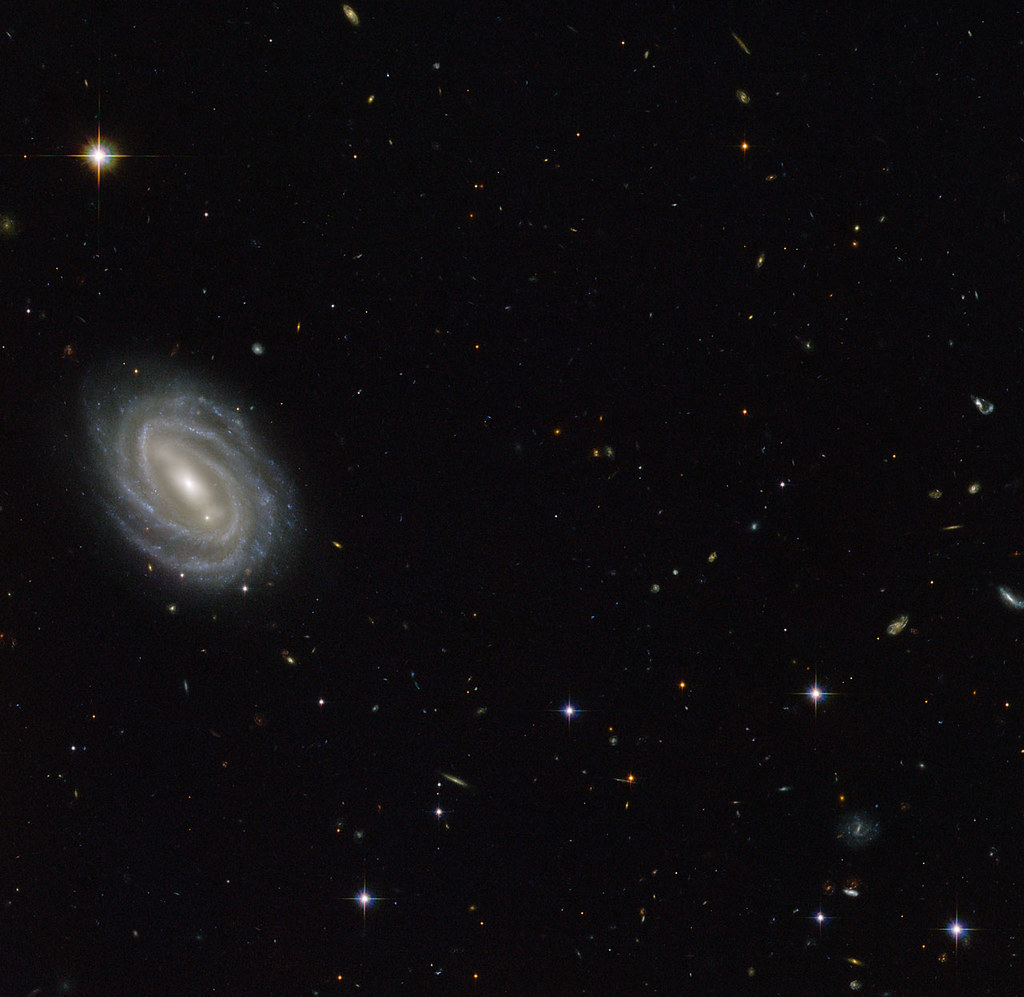
Hubble lensed supernova is a remarkable achievement as NASA’s Hubble Space Telescope reaches 200,000 orbits, seeking new cosmic phenomena.
Overview of Hubble’s Achievements
The Hubble Space Telescope has made significant contributions to our understanding of the universe, particularly with its observations of distant celestial phenomena. One of its most notable achievements is the discovery of lensed supernovae, which occur when the gravitational field of a massive object, like a galaxy, bends the light from a supernova behind it. This phenomenon allows astronomers to study these explosive events in unprecedented detail.
In a recent milestone, Hubble completed 200,000 orbits around Earth, further solidifying its legacy as a premier astronomical tool. Throughout its mission, Hubble has:
- Provided stunning images of galaxies, nebulae, and other cosmic structures.
- Enabled the measurement of the universe’s expansion rate.
- Discovered numerous exoplanets and their atmospheres.
- Revealed the presence of lensed supernovae, enhancing our understanding of dark matter.
These achievements underscore the telescope’s importance in expanding our knowledge of the universe.
What is a Lensed Supernova?
A lensed supernova is a remarkable astronomical phenomenon that occurs when the light from a distant supernova is magnified and distorted by the gravitational field of a massive object, such as a galaxy or a cluster of galaxies, located between the supernova and Earth. This effect, known as gravitational lensing, allows astronomers to observe supernovae that would otherwise be too faint or distant to detect.
The Hubble Space Telescope has played a crucial role in uncovering these lensed supernovae, providing insights into the expansion of the universe and the nature of dark energy. By analyzing the light curves of these lensed events, scientists can gather valuable data about the distance and brightness of supernovae, leading to profound discoveries.
- Magnification: The light from the supernova is enhanced, making it visible from great distances.
- Distortion: The massive object’s gravity warps the appearance of the supernova.
- Research Opportunities: These events are pivotal for studying cosmic evolution.
Significance of 200,000 Orbits
The significance of Hubble’s 200,000 orbits around Earth is monumental, especially in the pursuit of cosmic discoveries. This milestone highlights not only the longevity of the telescope but also its essential role in advancing our understanding of the universe. Among its many achievements, the detection of a Hubble lensed supernova stands out as a pivotal moment in astrophysics.
Each orbit allows Hubble to gather invaluable data, enhancing our knowledge of distant galaxies and the phenomena within them. The ability to observe lensed supernovae offers unique insights into the nature of dark matter and the expansion of the universe. Some key points of significance include:
- Enhanced Observational Power: Hubble’s unique position enables clearer views of distant events.
- Understanding Cosmic Expansion: Lensed supernovae help measure the universe’s accelerating growth.
- Collaboration with Ground-Based Observatories: Hubble’s data complements findings from Earth-bound telescopes.
Such discoveries reaffirm Hubble’s pivotal role in modern astronomy.
Recent Discoveries by Hubble
NASA’s Hubble Space Telescope continues to make remarkable contributions to the field of astronomy, particularly with its recent discoveries related to the Hubble lensed supernova. This innovative telescope has allowed scientists to observe distant galaxies and cosmic events that would otherwise remain hidden.
Among the most exciting findings are:
- Supernova Refsdal: Discovered in 2014, this was the first supernova observed to be lensed multiple times by a foreground galaxy.
- Cosmic Time Travel: Hubble has captured images of supernovae that occurred billions of years ago, providing insight into the evolution of the universe.
- Dark Energy Studies: Lensed supernovae help astronomers measure the expansion rate of the universe, shedding light on the mysterious force driving it.
With its precision and unique capabilities, Hubble remains an invaluable tool, pushing the boundaries of our understanding of the cosmos.
Future Missions of Hubble
The Hubble Space Telescope continues to pave the way for groundbreaking discoveries in the field of astronomy, particularly with its pursuit of the elusive Hubble lensed supernova. As Hubble embarks on its future missions, scientists aim to leverage its advanced imaging capabilities to explore the universe in unprecedented detail.
Upcoming projects include:
- Extended Surveys: Hubble will conduct extensive surveys to identify new lensed supernovae, providing valuable data on cosmic expansion.
- Collaboration with Ground-Based Observatories: Enhanced collaboration will allow for a comprehensive analysis of lensed events, improving our understanding of dark energy.
- Technological Upgrades: Future enhancements to Hubble’s instruments will increase its sensitivity and resolution, enabling the detection of fainter supernovae.
These missions promise to deepen our understanding of the universe and the phenomena surrounding it, ensuring that Hubble’s legacy of discovery continues for years to come.
The Impact of Hubble on Astronomy
The impact of the Hubble Space Telescope on astronomy cannot be overstated. Since its launch, Hubble has transformed our understanding of the universe, providing unprecedented clarity and detail in countless astronomical observations.
One of its most fascinating contributions is the discovery of lensed supernovae, which occur when a massive galaxy bends the light from a supernova behind it. This phenomenon allows astronomers to study supernovae from billions of light-years away, offering insights into the behavior of stars and the expansion of the universe.
Through its advanced technology, Hubble has made significant strides in identifying and analyzing these celestial events. Its ability to capture images and data has led to groundbreaking research, enhancing our comprehension of cosmic evolution.
As Hubble continues its mission, the discoveries of lensed supernovae remain a testament to its lasting legacy and the pivotal role it plays in advancing our knowledge of the cosmos.
The Hubble lensed supernova has provided astronomers with invaluable insights into the expansion of the universe. By studying the light from this Hubble lensed supernova, researchers can better understand cosmic phenomena and the nature of dark energy.
By NASA Goddard Photo and Video via Openverse